GB · Moderate entry · 2027
· verified
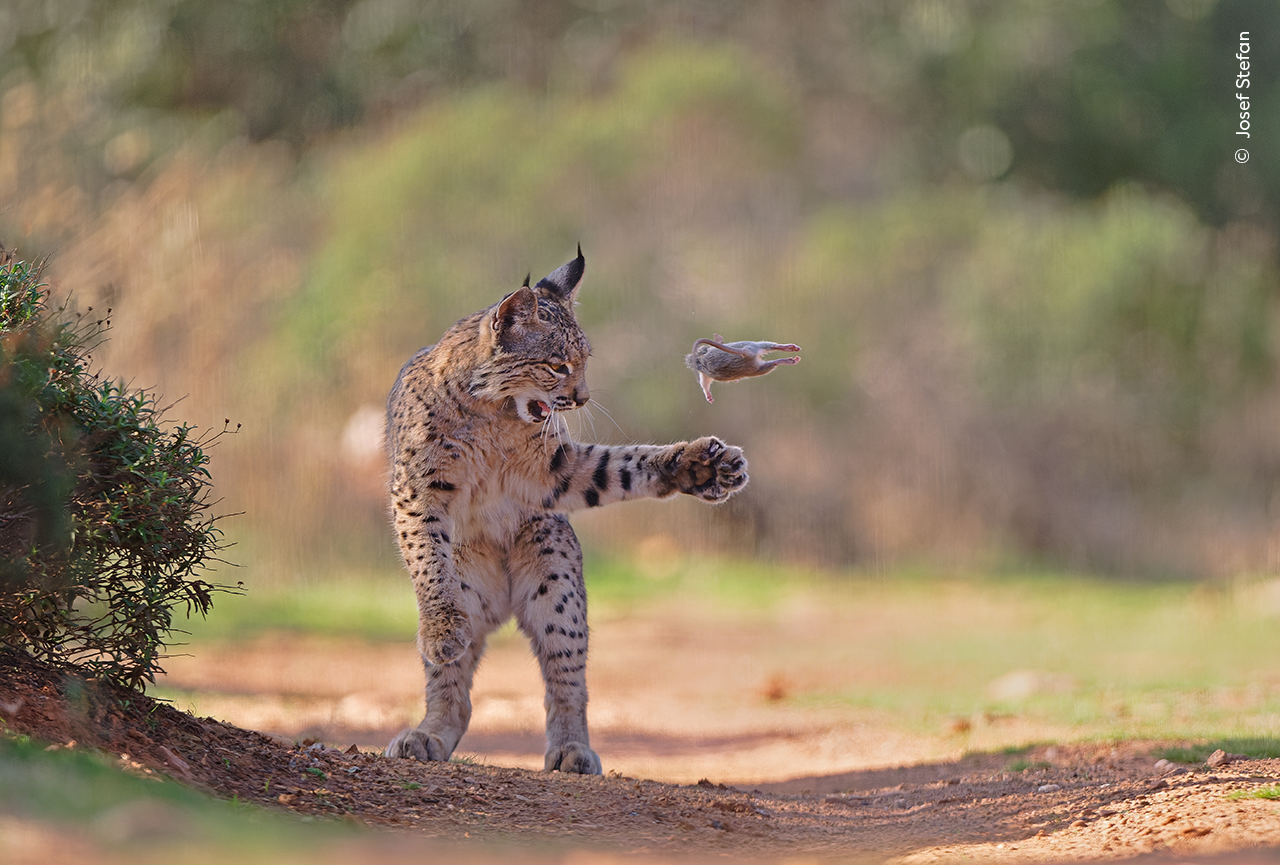
Wildlife Photographer of the Year (63rd) 2027
Natural History Museum, London nhm.ac.uk ↗
Closes Dec 04, 2026
·
D − 59
Worth entering? $12.5K top prize against 35 GBP per entry. The jury read and the rights terms below are what decide it — not the prize math. Jury read ↓ · Rights & disqualifiers ↓
Submit-Safe · before you pay the entry fee
Read the fine print
Read the fine print first — Wildlife Photographer of the Year (63rd) 2027 has 6 hard disqualifiers and demanding rights terms.
What this contest takes
Standard terms — you keep copyright and full control; the licence is limited to promoting the contest.
- Non-exclusive worldwide right to use submitted and winning images for the promotion of the WPY exhibition, NHM publications, the yearbook, and educational/conservation purposes.
- Duration: Perpetual for promotional purposes; exclusive rights not granted.
- You keep your copyright
- Credited when used
What disqualifies you
AI-generated or AI-rendered content is disqualified — and RAW files can be demanded to prove it.
- Capture date after Photographs must be shot within the past five years. “Photographs must have been shot within the past five years.”
- Image format Baiting prohibited (full ban as of 62nd competition) except for legitimate scientific research. “Any form of baiting will be prohibited, except where the photograph is the result of legitimate scientific research.”
- Image format Subject animals must not have been harmed, distressed, or restricted in their natural behavior. Captive animals must be disclosed. “Subjects must not have been harmed, distressed, or restricted in their natural behaviour.”
- Age minimum Adult competition: 18+. Young: 17 and under (with sub-brackets 10-and-under, 11-14, 15-17). “Adult competition entrants must be 18 years of age or older.”
- Ai generation AI-generated imagery and composite manipulation not accepted. “AI-generated imagery, composites, and stacked environments are not accepted.”
Closes Dec 4, 2026 · D−59
From 35 GBP per image
Upload spec:
Files: JPGMin 3000px long edgeUnder 20 MBsRGB colour profileCaption requiredNo watermarks
Check your photo against these exact rules — free →
No account · reads the editing line, the AI clause and the file spec · rules human-verified
The full editorial read continues with past-winner pattern, fee-to-prize value, rights translated, and three comparable competitions. Studio reads the rest.
Categories
Behaviour
one image · 4 categories
- Mammals
- Birds
- Invertebrates
- Amphibians and Reptiles
Animals in their Environment
Single
Evoking atmosphere and sense of place with habitat as a major element.
Underwater
Single
Life under water in marine or freshwater environments.
Urban Wildlife
Single
Nature's occupation or cohabitation in a human-dominated environment.
Wetlands: The Bigger Picture
Single
Wider-context wetland storytelling.
Oceans: The Bigger Picture
Single
Wider-context ocean storytelling.
Plants and Fungi
Single
Plant or fungal subjects.
Natural Artistry
Single
Simple beauty or complex artistry of nature.
Animal Portraits
Single
Strong individual animal portrait.
Photojournalism (Single)
Single
Single image telling a wildlife or conservation news story.
Photojournalism Story Award
Portfolio · up to 6 photos (min 4)
Multi-image wildlife photojournalism story.
Portfolio Award
Portfolio · up to 6 photos (min 4)
Cohesive body of wildlife photography work.
Rising Star Portfolio Award
Portfolio · up to 6 photos (min 4)
For photographers aged 18-26 only.
F Format requirements 1 spec
wpy_high_res
- File types: jpg
- Min long edge: 3000px
- Min size: 1.0 MB
- Max size: 20.0 MB
- Color profile: sRGB
- DPI: 300
- No watermarks
- Caption required (max 1500 chars)
E Eligibility 5 rules
-
Photographs must be shot within the past five years.
hard
“Photographs must have been shot within the past five years.”
-
Baiting prohibited (full ban as of 62nd competition) except for legitimate scientific research.
hard
“Any form of baiting will be prohibited, except where the photograph is the result of legitimate scientific research.”
-
Subject animals must not have been harmed, distressed, or restricted in their natural behavior. Captive animals must be disclosed.
hard
“Subjects must not have been harmed, distressed, or restricted in their natural behaviour.”
-
Adult competition: 18+. Young: 17 and under (with sub-brackets 10-and-under, 11-14, 15-17).
hard
“Adult competition entrants must be 18 years of age or older.”
-
AI-generated imagery and composite manipulation not accepted.
hard
“AI-generated imagery, composites, and stacked environments are not accepted.”
Jury context
International jury of biologists, conservation photographers, and editors. 2026 jury chaired by Kathy Moran (former Nat Geo deputy director of photography). Members include Laurent Ballesta (FR, marine biologist, 2× grand title winner), Jasper Doest (NL, 11× WPY winner, ILCP Senior Fellow), Florence Goupil (PE, Nat Geo Explorer), Blanca Huertas (UK/CO, entomologist), Sudhir Shivaram (IN). Distinctive feature: jury includes working scientists who flag biological implausibility before pixel-level forensics.
Priorities: patient fieldcraft authentic wild encounter technical mastery conservation narrative biological plausibility
Tone: patient unbaited technically demanding quietly observed conservation aware
Avoid: baited subjects captive undisclosed generative ai composite over staged
Past winners — text notes
Grand title winners share patient field craft (often weeks-to-years in pursuit of a single frame), authentic wild encounters, technical mastery, and conservation narrative. Recent winners include Shane Gross (jellyfish swarm, Bahamas, 2024) and Nima Sarikhani (polar bear, 2024 People's Choice). Composite, baited, and captive-animal work is increasingly banned outright. The competition has zero tolerance for AI-generated imagery and biological deception. Winners' work tours globally; the print exhibition sees ~700,000 visitors annually at the Natural History Museum London and partner venues.
These are text-only curatorial observations, never images of past winners.
Prizes
Grand Title (Wildlife Photographer of the Year): cash prize (historically £10,000) + trophy. Young Wildlife Photographer of the Year: £1,500 + 2-day masterclass + trophy. Adult category winners: £50 Love2shop voucher + trophy. Young category winners: £500. All winners: exhibition at NHM London + global touring exhibition + yearbook inclusion.
Exhibition Publication
R Rights & licensing what you grant the organizer
- What you grant
- Non-exclusive worldwide right to use submitted and winning images for the promotion of the WPY exhibition, NHM publications, the yearbook, and educational/conservation purposes.
- Duration
- Perpetual for promotional purposes; exclusive rights not granted.
- Exclusivity
- none
- Attribution
- Required
- Copyright retained by photographer
- Yes
Free bonus on signup: the 2026 Photo Contest Yearbook PDF — 22 contests classified, deadlines, fees, AI policies decoded.
Weekly Letters from the Critic
One photograph that hit Strong Submit, every Sunday.
The Letter is short, sober, and free. No upsell, no tracking pixel, no padding. Unsubscribe in one click — the link is in every email.
By signing up you agree to our privacy policy. Lawful basis: explicit consent (GDPR Art. 6(1)(a)). Withdraw anytime — the unsubscribe link is in every email.
Before you enter — quick answers
- Is Wildlife Photographer of the Year (63rd) 2027 free to enter?
- Wildlife Photographer of the Year (63rd) 2027 is not free: 35 GBP. Check the organizer's page for per-category pricing.
- Are AI-generated images allowed in Wildlife Photographer of the Year (63rd) 2027?
- No. Wildlife Photographer of the Year (63rd) 2027 does not permit AI-generated images — entries must be photographs, and AI image generators are prohibited.
- When is the Wildlife Photographer of the Year (63rd) 2027 deadline?
- Wildlife Photographer of the Year (63rd) 2027 closes on Dec 04, 2026 (in 59 days).
- How do I know if my photo is eligible for Wildlife Photographer of the Year (63rd) 2027?
- Read your photograph against Wildlife Photographer of the Year (63rd) 2027's published rules — the editing line, the AI clause, and the file requirements — free and without an account with WinPhoto's eligibility check. It tells you whether your image is eligible before you pay the entry fee.