This competition has closed. Its entry deadline has passed; this piece is kept for reference. For competitions open right now, see the summer deadline calendar → or browse what’s open today →.
A weekly editorial column. Each Sunday, one prestigious contest closing inside the next thirty days, read through the rubric the jury actually uses.
The Hamdan International Photography Award does not tell you who is judging your photograph.
In a field where every major prize trades on jury celebrity — World Press Photo announces its chair months ahead, Sony lists its rotating panel of editors, Aperture publishes curators for transparency — HIPA refuses. The rules text is explicit:
“The identity of judges will remain anonymous until the completion of the current season.”
The 2026 panel will be revealed at the Dubai ceremony in November, after the submission window has closed. Until then, the photographer entering Family is reading their archive against a jury they cannot study.
This is not oversight. It is editorial position. And it changes how a submission should be prepared.
The contest, in numbers
| Field | Value |
|---|---|
| Cycle | HIPA 2026 · 15th Season · theme “Family” |
| Total prize pool | USD 1,000,000 |
| Grand Prize (any category) | USD 200,000 |
| Family · 1st place | USD 40,000 |
| Family · 2nd / 3rd | USD 30,000 / 20,000 |
| Submission deadline | 23:59 UAE time (GMT+4), 31 May 2026 |
| Entry fee | Free |
| Eligibility | 18+, open internationally |
| Format | JPEG/JPG · min 5 MB · min 2000 px long edge · 300 DPI |
| AI policy | Authenticity strict in photographic categories; dedicated Dreams Through AI track for generative work |
| Awards ceremony | Dubai, November 2026 |
Fourteen days remain. Enough for one careful edit, one final read, one Saturday submission. Not enough for a re-shoot. The photograph that will win this cycle for any photographer reading this is already in their archive.
The brief, in HIPA’s own language
The 2026 Family page opens with three sentences:
“Family is the heart of life and the foundation of every society. It reflects belonging, connection and continuity.”
The category is called Family. Not Family Bonds. Not Family in Motion. One word, three lines of brief, the entire instruction set HIPA gives its submitters.
Three of those words carry the rubric — belonging, connection, continuity. The strongest submissions index at least one. The strongest contenders index more than one in a single frame. A photograph that depicts a family without speaking to any of the three — pleasant, well-lit, technically clean, conceptually empty — will not survive Round 1.
That is the brief in its simplest form. The rest of this column makes it operational.
What the anonymity tells us
When a jury is named, the submitter can read its members’ published work and tilt their submission toward the panel’s collective taste. The Aperture Portfolio Prize is the clearest case: the prize is, in effect, a what do these four named curators reward this year question, and a photographer who studies the four can answer it.
HIPA’s anonymity removes that route. The submitter cannot tilt toward the chair’s editorial register because no chair is named. The submitter cannot avoid a juror known to dislike a particular post-processing aesthetic because no juror is identified. What remains: read the brief carefully, read past winners carefully, trust the rubric on the page.
What the anonymity tells us about the jury — indirectly, from past panels revealed after each ceremony — is the geographic and professional distribution. The 14th-season panel, revealed at the November 2025 ceremony, included practitioners from the United Arab Emirates, Egypt, Argentina, China, the United Kingdom, and Brazil. Working photographers, editors, and museum curators. Majority non-Western. The 2026 panel will follow this pattern. The submitter should plan for it.
The implicit qualifier: a photograph that reads as universal — substitutable for any country, any culture, any household — carries less weight than a photograph that reads as culturally specific and respectfully observed.
Five past HIPA Grand Prizes, read for pattern
HIPA names a new theme each cycle. Family has not appeared in the previous fourteen seasons and will be retired when the November 2026 ceremony closes — there is no past Family category to study and no Family category to anticipate. What the submitter can study is the past five HIPA Grand Prize winners — photographs that won regardless of theme, judged by anonymous panels of the same kind, announced at the same ceremony Family entrants are competing into.
2025 · “Power” · Gianluca Gianferrari (Italy) · Etna’s Paroxysm. Mount Etna mid-eruption at night; glowing lapilli arcing against fresh snow. The “power” the title names is geological, not human. Long exposure, careful exposure of bright lava against dark sky, a paroxysmal phase that lasts minutes.
2024 · “Sustainability” · Liping Cao (China) · Quiet Power. A wind farm at Lake George, NSW, Australia, under brooding cloud. The theme is read through visual metaphor — turbines, weather, scale — rather than through human subjects. The decisive choice was atmospheric: storm-light gave the engineered installation gravity that flat afternoon sun would have flattened.
2023 · “Diversity” · Massimo Giorgetta (Italy) · A five-centimetre jellyfish tunicate, covered in marine micro-organisms. Biological diversity rendered at macro scale — the photograph functions as visual metaphor for the theme. The technical achievement is the lighting on a translucent subject in shallow water.
2021–22 · “Nature” · Henley Spiers (United Kingdom) · Gannet Storm. A northern gannet diving at approximately 62 mph, photographed underwater off the Isle of Noss, Shetland. One of the most technically demanding wildlife photographs of the decade. Weeks of waiting, an underwater housing rated to impact, a single decisive frame.
2020 · “Humanity” · Ary Bassous (Brazil) · Duty. An exhausted healthcare worker after an eight-hour shift in a Covid-19 emergency room. The “humanity” theme read through individual exhaustion, not group portraiture. One subject, one decisive moment, one frame the photographer could only have made in that hospital, that month, that year.
Three patterns hold across all five.
The photograph reads the theme metaphorically, not literally. None of these winners showed a literal interpretation. The “Power” winner showed a volcano, not muscle. The “Sustainability” winner showed turbines under storm-cloud, not solar panels neatly arranged. Family in 2026 should read belonging, connection, continuity through a photograph that proves the theme rather than depicting it.
A single frame, decisively timed. Every Grand Prize winner is one capture. No composites. No collage. The HIPA jury rewards the instant the photographer chose to release the shutter, not the construction of an image after the fact.
The technical floor is not negotiable. Every winner is sharp where it matters, exposed under control, colour or monochrome faithful to scene. A photograph that fails on technical grounds — soft focus on the principal subject, blown highlights in the wrong half of the frame, a colour cast that distorts skin — does not survive Round 1 with strong concept alone.
The authenticity policy, in HIPA’s own language
HIPA’s 2026 rules state two clauses that govern submissions in the photographic categories — Family among them:
“Participants are required to submit a written declaration confirming that no artificial intelligence tools or software were used in the creation of submitted works in categories where such technologies are not permitted.”
“Basic technical editing of the Photo(s) is acceptable, provided any such editing does not affect the authenticity and/or genuineness of the Photo(s). Advanced editing used to create illusions, deceptions and/or manipulations; including compositing and creative retouching of the Photo(s) prohibited.”
Operationally: denoise, sharpen, dodge-and-burn, white-balance correction, basic crop — acceptable. Generative fill, sky replacement, compositing two frames, AI-rendered content — disqualifying.
The AI exception is the Dreams Through AI category, which has its own brief: work “based on an original source photo captured by, or legally owned by, the participant, which has been further developed or transformed using artificial intelligence techniques.” A photographer whose work lives in the generative register submits there, not in Family.
The declaration of authenticity at submission is a written attestation. False declaration is a disqualification offence with HIPA’s appeals committee. A submitter uncertain whether their post-processing has crossed the authenticity line should err toward the frame with less editing, not more.
A Strong Submit checklist for Family 2026
The brief — belonging, connection, continuity — translates into seven operational checks. Each is binary. A photograph that earns six or seven of the seven is in shortlist territory. A photograph at five or below should be edited, re-evaluated, or replaced before submission.
- Theme legibility. Can a reader trace the photograph to belonging, connection, or continuity without the caption? If yes — point.
- Cultural anchor. Could the photograph have been made anywhere, or does it belong unmistakably to a specific place and culture? If specifically anchored — point.
- Material detail. Is there a visible object — clothing, food, tool, architectural element — that confirms the cultural setting beyond doubt? If yes — point.
- Action over pose. Are the family members doing something — cooking, walking, working, mourning, celebrating — rather than facing the camera? If yes — point.
- Single capture. Was the frame made with one shutter release, no composite? If yes — point.
- Technical floor. Sharp where it matters, exposure under control, colour faithful to scene. If yes — point.
- Photographer’s relationship to subject. Is there evidence the photographer knew the people in the frame — depth of look, naturalness of subject, access a stranger could not have had? If yes — point.
The rubric in operation: three reads
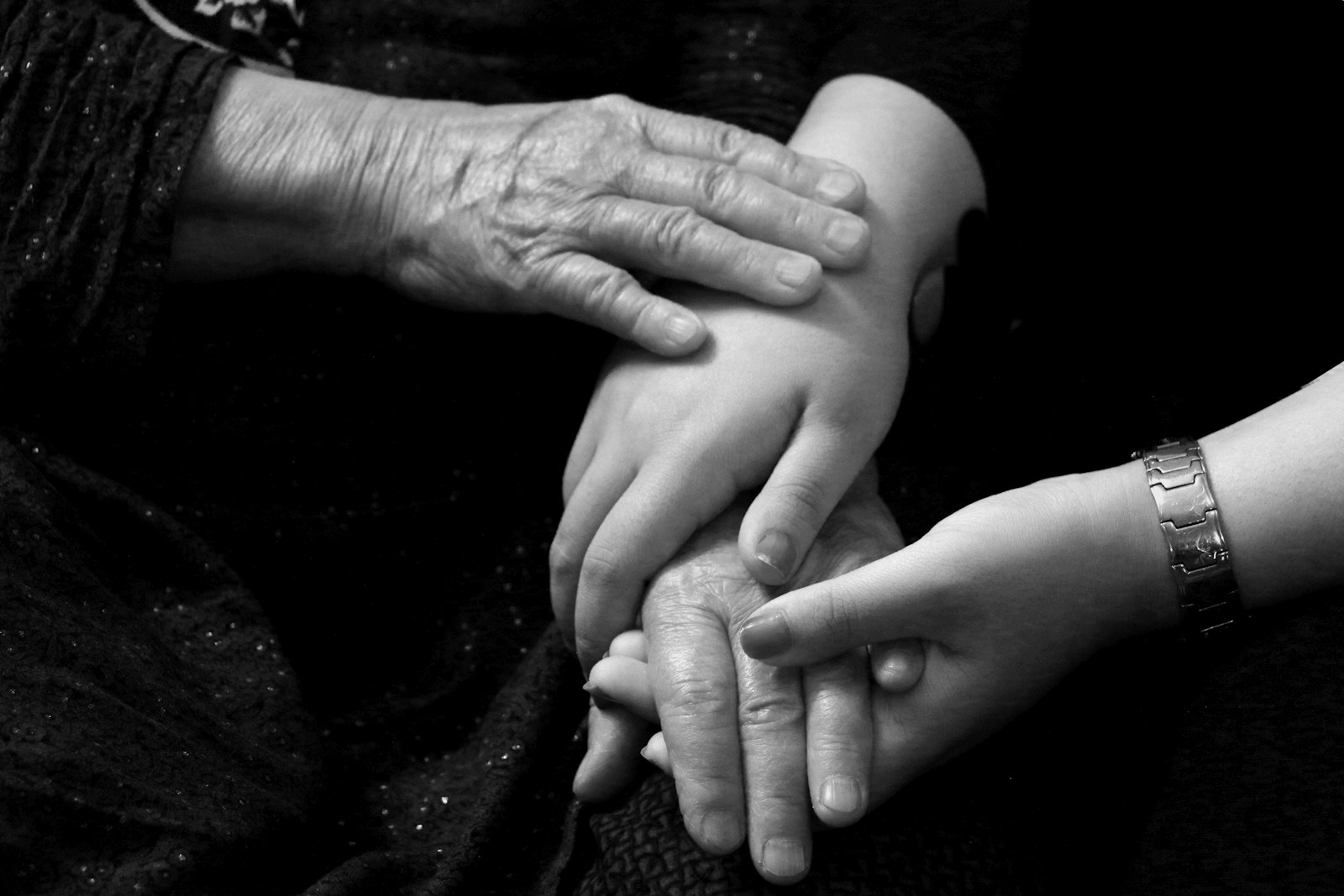
A. A grandmother and granddaughter shaping bread dough in a sun-lit kitchen, Aleppo, Syria. Olive-wood table, brass tray, hands in flour. Score: 7/7. Theme (continuity through bread-making, a generational transmission). Cultural anchor (clearly Levantine). Material detail (olive-wood table, brass tray). Action (shaping dough). Single capture. Technical floor (assumed clean). Photographer relationship (the depth of access reads only with prior trust). Verdict: Strong Submit.
B. Three siblings smiling at the camera, Christmas morning, somewhere in Europe. Score: 2/7. Theme yes — connection — but a connection that lives in any household. No cultural anchor. No material detail beyond the generic global symbols of Christmas. Posed, not acting. The photographer relationship is visible (the children are comfortable), but the photograph belongs in a personal album. Verdict: Skip. It will not survive Round 1.
C. A Berber woman applying henna to a bride’s hands, Marrakech. Detail crop on hands and pattern. Score: 6/7. Theme (continuity, ritual transmission). Cultural anchor (unmistakably Maghrebi). Material detail (henna, hands, jewellery). Action. Single capture. Technical floor. The missing point: the photographer-relationship signal is hard to read on a tight crop alone. Verdict: Refine. A wider frame that surfaces access — or a second frame showing the room — pulls this into Strong Submit territory in two days of careful editing.
The week’s strategy
For the photographer choosing a frame on Sunday 17 May:
- Begin with photographs made in cultural settings the photographer knows from the inside. The non-Western majority on HIPA’s panels reads cultural specificity faster than any other signal in the frame.
- Edit ruthlessly. The best-lit photograph is not always the right one. The right photograph is the frame where belonging, connection, or continuity reads loudest. The second-best-lit frame can win against the best-lit one if it is culturally stronger.
- Caption thinly and precisely. HIPA reads the photograph first; the caption is supporting context. Thirty to sixty words of factual description, no editorial commentary, no first-person voice. For portrait submissions — where a single person is the principal subject — the rules require a minimum 150-word caption; that longer caption is the place to surface relationship, place, and timing without intruding on the image.
- Submit Saturday 30 May, not Sunday 31. The HIPA upload portal slows under deadline-day load. A Saturday submission lands cleanly and leaves an overnight window to swap files if the photographer changes their mind.
Run a frame against the rubric
The seven points above are the column’s pre-submission test — a thinking tool the careful photographer runs themselves. The WinPhoto verdict engine is the second opinion: it reads frames against HIPA Family 2026’s full brief and returns a fit score out of 100, a verdict tier (Strong submit, Submit, Maybe, or Weak match), and the reasoning — strengths, concerns, and the next concrete step. The two tests work together. The seven-point check helps you decide what’s worth submitting; the engine tells you how it reads.
Next Sunday, and the column shape
The Sunday Submission is a weekly column. Issue № 02 lands Sunday 24 May. The likely candidate: Mangrove Photography Awards — deadline 1 June, free entry, a conservation register, a small jury that reads every entry with care.
— The Critic
HIPA Family 2026 submissions close 23:59 UAE time on 31 May 2026. Apply at hipa.ae/award/family-hipa-award-2026.